 धातुकार
Choose the job before the colour
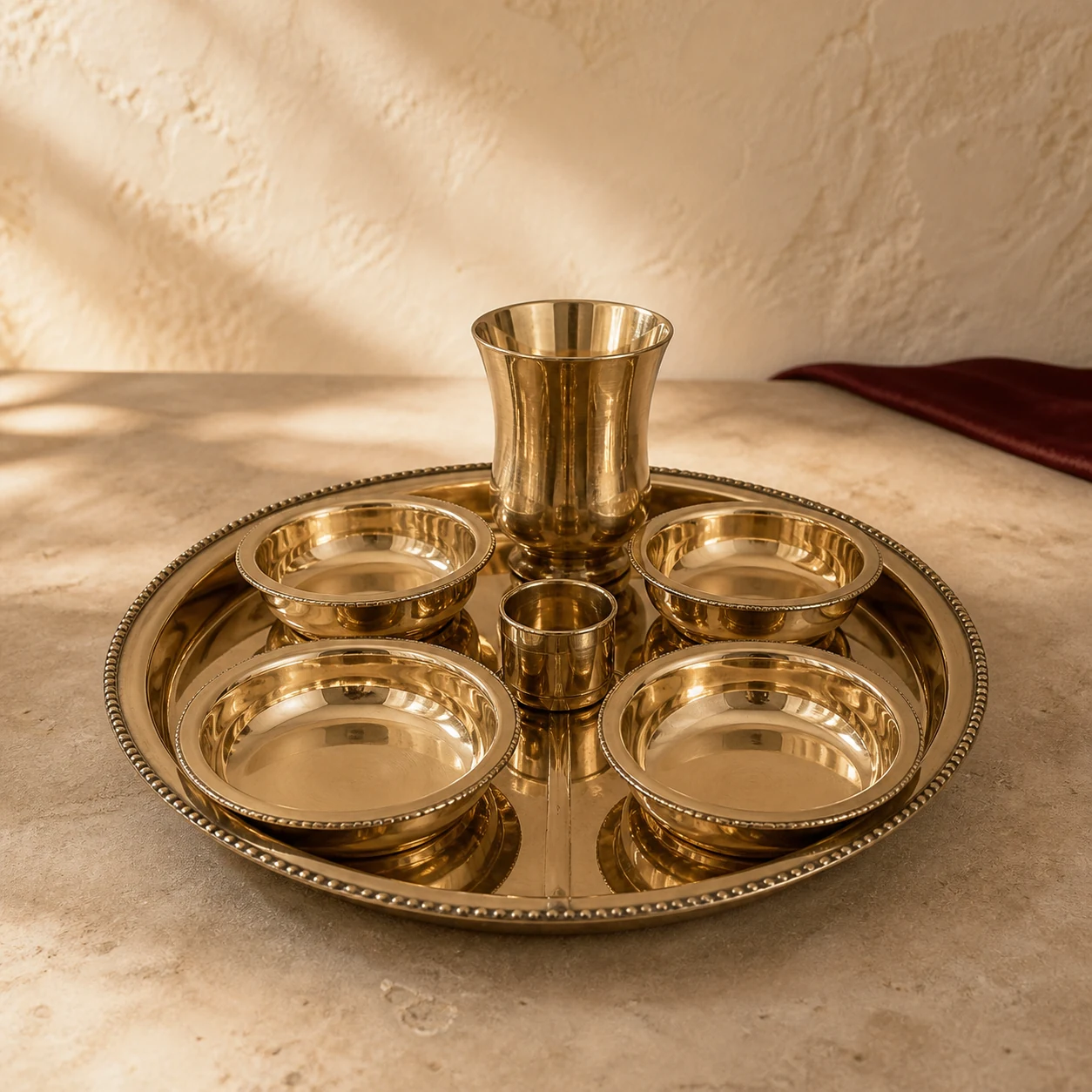
Start with where the piece will live and what it needs to do. A dining set needs a comfortable rim and manageable weight. Cookware needs the right construction for heat and food contact. A diya or urli needs a stable base.
Then choose the finish you want to maintain. Brass starts warm gold, copper has a redder glow and bell metal carries a muted bronze-brown tone.
Choose brass for range
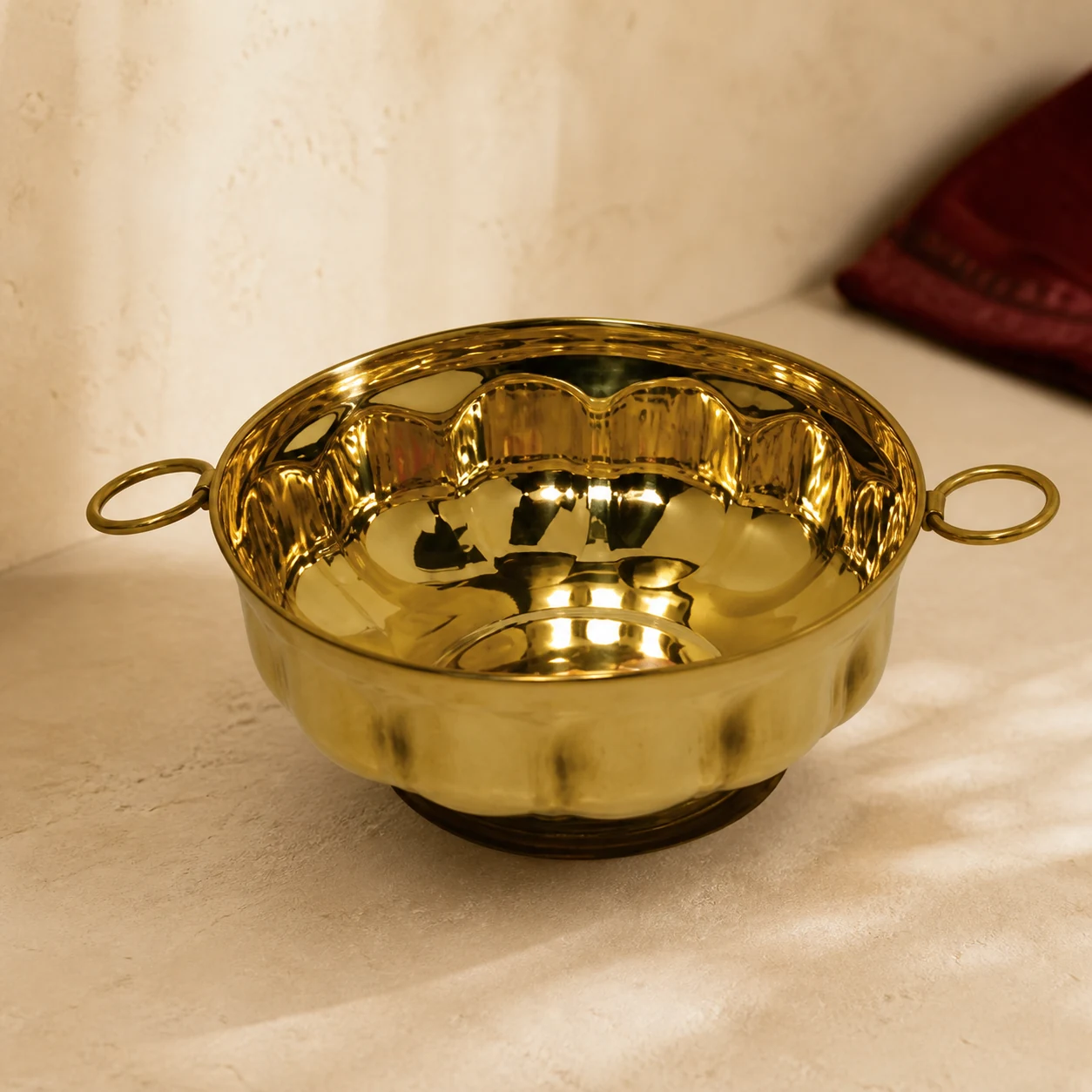
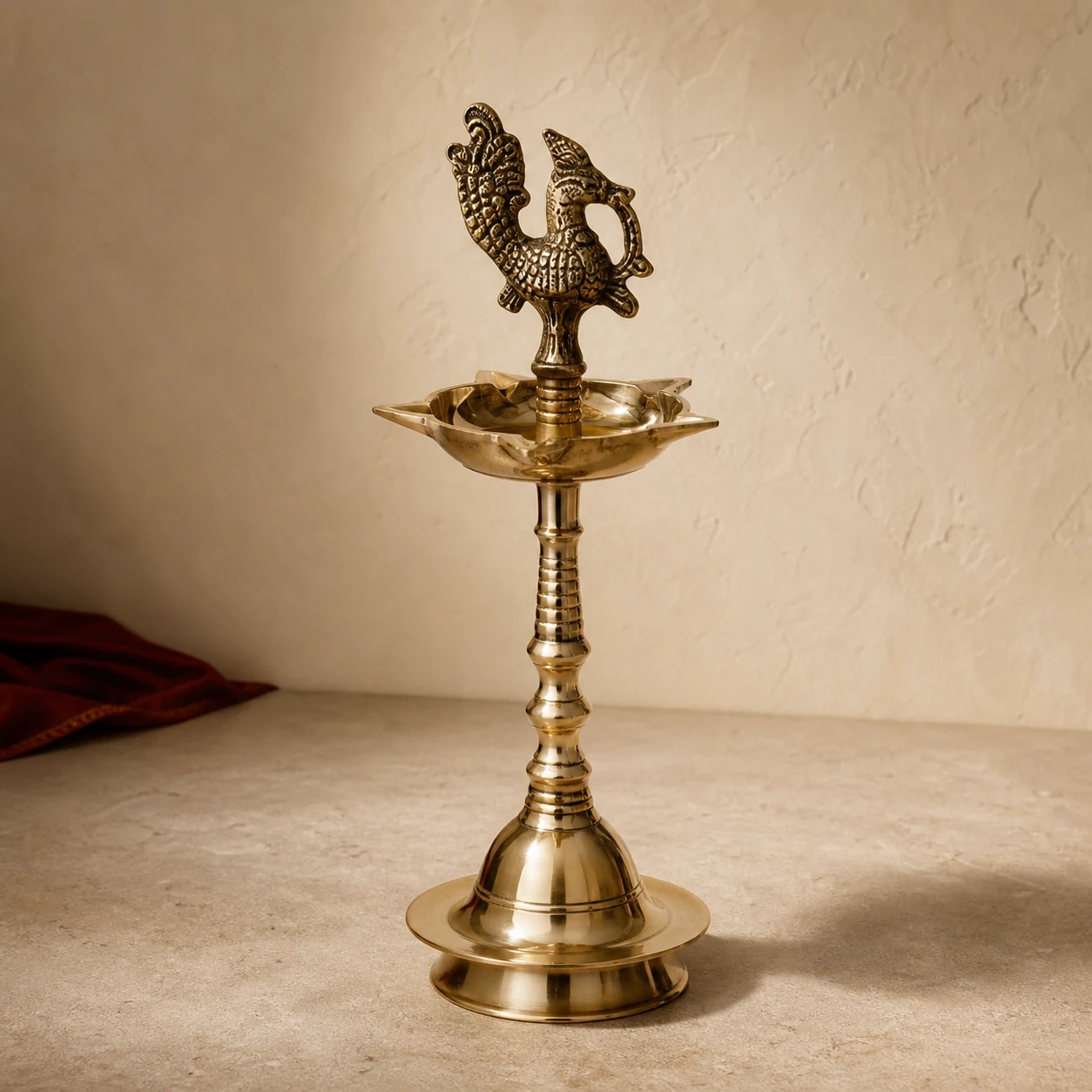
Brass works across serveware, dining, pooja pieces and décor. It has a satisfying weight and develops a darker patina unless you polish it.
For cookware, check the exact lining and use guidance. Do not assume unlined brass is suitable for every food.
Choose copper for colour and heat response
Copper responds quickly to heat, so traditional cookware commonly uses a separate lining for food contact. Its reddish surface also changes tone faster than brass.
If you prefer bright copper, expect more frequent polishing. For waterware, follow the product instructions and keep the vessel clean and dry between uses.
Choose bell metal for weight at the table
Bell metal is a bronze alloy used widely in dining ware. It usually feels weightier in the hand and looks more muted than polished brass.
Choose it when that substantial feel and deeper bronze tone suit the way you like to set a table.
Product construction varies. Always follow the listing and care card for the exact piece you own, especially for cookware and food contact.